Size and image-area tradeoffs
Continue to the next decision in the screen-selection process.
Screen gain describes reflected brightness relative to a reference surface in a defined direction. It does not tell you whether a screen is “better.”
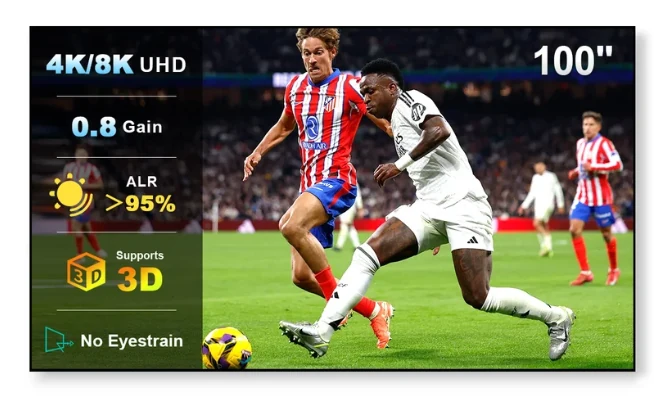
A nominal 1.0-gain reference is the common comparison point. A lower number such as 0.8 generally reflects less light toward the reference viewing direction than a 1.0 surface under the test conditions. A higher-gain screen can concentrate more light toward a narrower area, sometimes trading viewing flexibility for brightness.
ALR performance is about controlling where light goes. A screen can deliberately reject or absorb light from unwanted directions, which may come with lower nominal gain. That can still improve perceived picture quality in a lit room because contrast is being protected from ambient washout.
Your projector has healthy output, the room has ambient light, and the screen's optical structure improves contrast enough to outweigh the lower nominal brightness.
You need more brightness from limited projector output and your seating / room geometry suits the screen's viewing cone.
A 130-inch image has substantially more area than a 100-inch image. The same projector therefore produces fewer lumens per square foot on the larger screen. This is one reason to resist choosing the biggest screen before checking projector brightness and throw distance.
The featured long-throw ALR screen is listed at 0.8 gain and a 170° viewing angle. The manufacturer also recommends a projector with at least 2,000 ANSI lumens. Taken together, those specs suggest a design aimed at broad seating and ambient-light control rather than a narrowly concentrated high-gain hotspot.
Use the merchant page for the current screen sizes, availability and published specifications.
Check Current Price & Availability