100 vs 120 vs 130 on the featured product
Continue to the next decision in the screen-selection process.
Choose screen size from the wall inward: usable width, eye line, seating distance, projector throw and brightness all have to fit.
| Diagonal | Approx. width | Approx. height | Approx. area |
|---|---|---|---|
| 100" | 87.2" / 221.4 cm | 49.0" / 124.5 cm | 29.7 sq ft |
| 120" | 104.6" / 265.7 cm | 58.8" / 149.4 cm | 42.7 sq ft |
| 130" | 113.3" / 287.8 cm | 63.7" / 161.9 cm | 50.1 sq ft |
Leave room for the physical frame, speakers, trim, switches and access. A nominal 120-inch 16:9 image is already about 8.7 feet wide before the frame is added.
Use the projector manufacturer's throw calculator or throw-ratio specification. Screen size is not independent from lens-to-screen distance.
Moving from 100 to 130 inches increases image area by roughly two-thirds. If the projector output stays the same, the larger image will be dimmer. That matters even more in a room with ambient light.
A massive screen mounted too high can be tiring. Prioritize a comfortable eye line from the main seats and make sure the bottom edge still clears furniture and speakers.
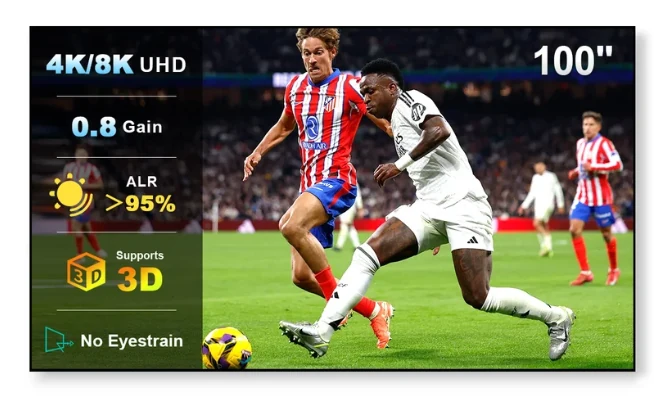
NothingProjector currently lists 100, 120 and 130 inch versions of its standard/long-throw lenticular ALR screen.
Check Size Availability